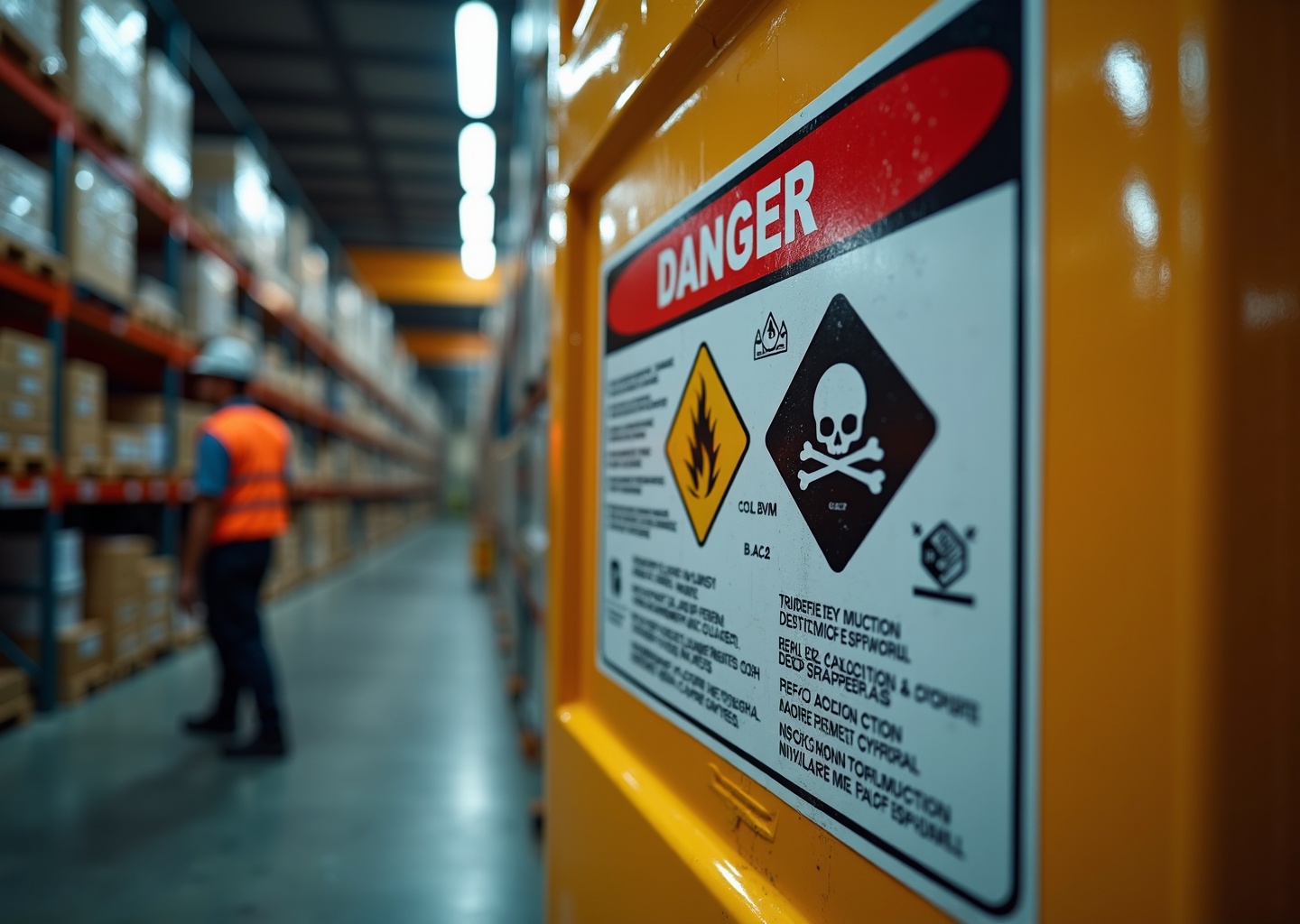
GHS labeling is central to OSHA Hazard Communication compliance and worker safety. This article explains required GHS label elements with a focus on pictograms and signal words, how to apply them correctly, common pitfalls, and practical steps employers can use in manufacturing, construction, warehouses, and office settings to meet 29 CFR 1910.1200 and reduce chemical risk.
Regulatory framework and the role of OSHA
At the heart of the Hazard Communication Standard (HCS) are two powerful tools designed to give you an immediate sense of a chemical’s dangers: signal words and pictograms. As the first things you notice on a GHS-compliant label, they provide a quick visual summary of the hazards inside the container before you read the fine print. Understanding these elements is not just about compliance; it’s a fundamental skill for anyone working with or around hazardous substances.
The system uses just two signal words to convey the level of hazard: Danger and Warning. The choice is not arbitrary. Danger is reserved for the most severe hazards—chemicals that could cause serious injury or death. If you see this word, it’s a clear signal to handle the substance with extreme caution. Warning is used for less severe, but still significant, hazards, such as chemicals that cause skin irritation or are harmful if swallowed. A key rule is that a label will never have both signal words. If a chemical has multiple hazards of varying severity, the label will only display the signal word for the most serious one. For example, if a substance is both a severe skin corrosive (requiring “Danger”) and a mild irritant (requiring “Warning”), the label will only show “Danger.”
Working alongside the signal word are the pictograms: standardized graphic symbols that communicate the specific type of hazard. Each pictogram consists of a black symbol on a white background, framed within a red diamond. The red border is mandatory and makes the pictograms stand out. OSHA’s HCS requires eight specific pictograms, each representing distinct hazard classes, from flammability and reactivity to acute toxicity and carcinogenicity. For example, a flame indicates a fire hazard, while a skull and crossbones warns of a substance that can be fatal. It’s important to note that while the Globally Harmonized System (GHS) includes a ninth pictogram for environmental hazards (a tree and a dead fish), OSHA does not mandate its use because its authority is limited to worker safety, not environmental protection. You may still see this pictogram on labels from suppliers, but it is not an OSHA requirement.
These two elements, the signal word and the pictograms, are designed to be interpreted together. The signal word tells you how hazardous a chemical is, while the pictograms tell you what kind of hazards are present. For instance, seeing the “Flame” pictogram with the signal word “Danger” indicates a highly flammable substance that poses a serious fire risk. The same pictogram with the word “Warning” might indicate a combustible liquid that is less easily ignited but still a fire hazard. This combination provides a rapid, multi-layered safety message that is easy to understand across different languages and literacy levels. This information must always be consistent with the detailed hazard classification found in Section 2 of the chemical’s Safety Data Sheet (SDS).
In a practical setting, these labels are everywhere. In a manufacturing plant, a 55-gallon drum of acetone will prominently display the “Flame” and “Exclamation Mark” pictograms and the signal word “Danger.” On a construction site, a bucket of muriatic acid used for cleaning concrete will feature the “Corrosion” pictogram and “Danger.” In a warehouse, a large tote of industrial bleach will have the “Flame Over Circle” for its oxidizing properties and “Corrosion” pictograms, both under the signal word “Danger.” Even in an office, a bottle of aggressive cleaning solvent used by the maintenance staff might carry the “Exclamation Mark” pictogram and the signal word “Warning” to indicate it can cause skin irritation.
As an employer, your responsibility is to ensure that every container of hazardous chemicals in your workplace, from the original shipping drum down to the smallest spray bottle your team uses, is properly labeled. This is a cornerstone of your written Hazard Communication Program. However, labels are only effective if your employees understand what they mean. Training is not optional. Your team must be able to recognize each pictogram and understand the difference in severity between “Danger” and “Warning.” This knowledge empowers them to take the right precautions, select the appropriate personal protective equipment, and respond correctly in an emergency. For a detailed breakdown of each symbol, OSHA provides an excellent resource, the Hazard Communication Standard: Labels and Pictograms brief.
GHS pictograms what they mean and how to use them
Pictograms are the first thing most people notice on a GHS label. They are simple, graphic images that immediately convey the types of hazards associated with a chemical. Under OSHA’s Hazard Communication Standard, these symbols are mandatory and standardized, ensuring that a worker in a Texas manufacturing plant understands the same basic hazard as a construction worker in California. Understanding what each pictogram means is a fundamental step toward a safer workplace.
There are nine pictograms recognized under the GHS, and OSHA requires eight of them for specific hazard classes. Each one consists of a black symbol on a white background, framed within a red diamond. The red frame is non-negotiable; a label with a black frame is not compliant for shipped containers.
Let’s break down each of the OSHA-mandated pictograms.
-
Health Hazard
This pictogram, showing a person’s silhouette with a starburst on the chest, indicates a substance may be a carcinogen, mutagen, cause reproductive toxicity, be a respiratory sensitizer, target organ toxicity, or aspiration toxicity. Workplace Examples: You’ll find this on containers of benzene used in manufacturing, formaldehyde in some building materials, or crystalline silica which is a major concern in construction and masonry. -
Flame
A simple flame symbol means the chemical is a flammable, a pyrophoric, is self-heating, emits flammable gas, is a self-reactive, or an organic peroxide. Workplace Examples: This is one of the most common pictograms, appearing on solvents like acetone in factories, propane cylinders on construction sites, and many aerosol cleaning products found in warehouses and offices. -
Exclamation Mark
This pictogram is used for a variety of less severe hazards. It indicates an irritant (skin and eye), a skin sensitizer, acute toxicity (harmful), a narcotic effect, or respiratory tract irritation. Workplace Examples: Many common industrial cleaning agents, some adhesives, and lubricants will carry this symbol. It’s a frequent sight in warehouses and even on some office cleaning supplies. -
Gas Cylinder
This symbol indicates gases under pressure. The hazard is not just chemical but also physical; a ruptured cylinder can become a dangerous projectile. Workplace Examples: This applies to compressed gas cylinders for welding like acetylene and oxygen, nitrogen tanks in manufacturing, or even fire extinguishers containing compressed gases. -
Corrosion
This pictogram shows a chemical spilling on both a hand and a piece of metal, indicating it can cause skin corrosion or burns, serious eye damage, or is corrosive to metals. Workplace Examples: Strong acids like sulfuric acid used in battery charging stations, caustic sodas (sodium hydroxide) for cleaning in manufacturing plants, and powerful drain cleaners all require this pictogram. -
Exploding Bomb
This symbol is for substances that are explosives, self-reactives, or organic peroxides that may explode when heated. These are among the most dangerous physical hazards. Workplace Examples: While less common in typical workplaces, this pictogram is critical for facilities that handle unstable chemicals like nitroglycerin or certain organic peroxides used in chemical manufacturing. -
Flame Over Circle
This symbol represents oxidizing hazards. Oxidizers can cause or contribute to the combustion of other materials, usually by yielding oxygen. They can cause fire or explosions. Workplace Examples: Chemicals like hydrogen peroxide, potassium permanganate, and bleaches (sodium hypochlorite) used for sanitation in food processing or water treatment facilities will have this pictogram. -
Skull and Crossbones
This well-known symbol indicates a substance can cause death or severe toxicity if swallowed, inhaled, or in contact with skin (Acute Toxicity, categories 1-3). Workplace Examples: This is found on highly toxic chemicals like certain pesticides used in agriculture or construction site preparation, and some industrial chemicals like hydrogen cyanide.
You might also see a ninth pictogram, the Environment symbol (a dead tree and fish). As noted earlier, this pictogram is not mandatory under OSHA’s HCS. OSHA’s jurisdiction is worker safety, not environmental protection. However, you may see it on labels from suppliers who also comply with EPA regulations or international standards, so it’s good for employees to recognize it.
When a chemical presents multiple hazards, its label must include a pictogram for each. However, there are precedence rules. If a label has the Skull and Crossbones for severe acute toxicity, you would not use the Exclamation Mark for less severe toxicity. Similarly, the Corrosion pictogram for skin damage overrides the Exclamation Mark for skin irritation. OSHA does not mandate a specific order for displaying multiple pictograms, but grouping them logically makes the label easier to read.
The rules for pictogram size and placement are practical. There is no minimum size requirement, but the pictogram must be large enough to be legible and conspicuous on the container. They should be prominently displayed on the label and not be obscured by other text or markings. On a standard label layout, pictograms are typically grouped together below the product identifier and above the signal word and hazard statements. For secondary workplace containers, like a spray bottle filled from a larger drum, the label must be replicated with all the original elements. For very small containers where a full label is impossible, OSHA allows for alternative methods like pull-out labels, tags, or, thanks to the 2024 HCS update, QR codes that link to the full label information.
Finally, here is a quick checklist for safety managers to ensure pictogram compliance.
Pictogram Compliance Checklist
- Are all required pictograms present for the hazards listed in Section 2 of the Safety Data Sheet (SDS)?
- Does each pictogram have a red border, a white background, and a black symbol?
- Are the pictograms large enough to be easily seen and identified from a normal distance?
- Are pictograms placed prominently on the label and not hidden or covered?
- Have precedence rules been applied correctly? (e.g., Skull and Crossbones is used instead of Exclamation Mark for acute toxicity).
- Do labels on secondary containers (spray bottles, jugs) accurately reflect the pictograms from the original container?
- For small containers, is an approved alternative labeling method used if the full pictogram is not feasible?
Signal words hazard statements and other label elements
While pictograms provide an immediate visual warning, the text on a GHS label gives you the specific details needed to work safely. The most prominent text elements are the signal words, which act as a quick indicator of the hazard level. Under OSHA’s Hazard Communication Standard (HCS), only two signal words are permitted: Danger and Warning.
The choice between them is strictly determined by the chemical’s hazard classification.
- Danger is used for the most severe hazard categories. This includes chemicals that can cause death, cancer, or serious, irreversible damage. If you see “Danger” on a label, it signals a high-risk situation requiring strict adherence to safety protocols.
- Warning is used for less severe hazards. These are chemicals that may cause irritation, dizziness, or other reversible health effects. While less severe, these hazards still demand caution and proper handling.
A common point of confusion is how to handle products with multiple hazards of varying severity. The rule is simple: only one signal word is used on the label, and it must correspond to the most severe hazard. If a chemical is both a skin irritant (Warning) and acutely toxic if swallowed (Danger), the label must use “Danger.”
Beyond the signal word, a fully compliant GHS label must contain six key elements.
- Product Identifier. This is the name or number used for a hazardous chemical on the label and in the Safety Data Sheet (SDS). It must be the exact same identifier in both places to allow for quick cross-referencing.
- Supplier Identification. The name, address, and telephone number of the chemical manufacturer, importer, or other responsible party.
- Pictograms. The diamond-shaped symbols that provide a quick visual reference for the hazard type.
- Signal Word. Either “Danger” or “Warning,” as determined by the hazard classification.
- Hazard Statements. Standardized phrases that describe the nature and degree of the hazard.
- Precautionary Statements. A set of standardized phrases that recommend measures to minimize or prevent adverse effects from exposure.
You may also see supplemental information on a label, such as directions for use or expiration dates. This is permitted as long as it does not contradict or cast doubt on the required hazard information.
Hazard and precautionary statements are the core of the label’s instructional text. They are not written from scratch but are assigned based on the chemical’s hazard classification and must be taken directly from Appendix C of the HCS. The easiest way to ensure compliance is to pull them directly from Section 2 of the chemical’s SDS. The hazard statements on your label must be an exact match to those listed on the SDS.
Creating a compliant label involves a systematic process.
Step-by-Step Label Creation
- Obtain the SDS. Start with the current Safety Data Sheet for the chemical. All the information you need is located in Section 2, “Hazard(s) Identification.”
- Identify the Six Elements. From Section 2 of the SDS, pull the exact Product Identifier, Signal Word, Hazard Statement(s), and required Pictogram(s). Find the Supplier Identification in Section 1.
- Select Precautionary Statements. The SDS will list all applicable precautionary statements. These are grouped into four types: prevention, response, storage, and disposal. You must include all required statements on the label.
- Assemble the Label. Arrange the six elements on your label in a clear, logical manner. While OSHA does not mandate a specific layout, the elements must be legible and prominently displayed. A common template places the Product Identifier and Supplier Info at the top, followed by the Pictograms, Signal Word, and then the full text of the Hazard and Precautionary Statements.
Labeling in Practice: Industry Examples
- Manufacturing: A drum of acetone would require a label with the Flame and Exclamation Mark pictograms. The signal word would be Danger due to its high flammability. The hazard statement would include “Highly flammable liquid and vapor” and “Causes serious eye irritation.”
- Construction: A container of muriatic acid used for cleaning concrete needs the Corrosion pictogram and the signal word Danger. Its hazard statements would be “Causes severe skin burns and eye damage” and “May cause respiratory irritation.”
- Warehouses: A concentrated hydrogen peroxide solution used as a sanitizer requires the Flame Over Circle (oxidizer) and Corrosion pictograms. The signal word is Danger, with hazard statements like “May cause fire or explosion; strong oxidizer” and “Causes severe skin burns and eye damage.”
- Offices: While less common, some office products require GHS labels. A commercial-grade adhesive remover might have the Flame pictogram, the signal word Warning, and the hazard statement “Flammable liquid and vapor.”
Finally, labels must be durable. They need to be legible and firmly attached for the entire life of the container. This means they must resist fading, smudging, water, and chemical exposure. For multilingual workplaces, all required information must be in English, though you can add information in other languages as a supplement.
Frequently Asked Questions about GHS labels and OSHA requirements
Are pictograms and full GHS labels required on small containers and samples?
Yes, in principle. OSHA’s Hazard Communication Standard (HCS) requires every container of a hazardous chemical to be labeled. However, OSHA recognizes that applying a full-size label to a tiny vial is impractical. For small containers, you can use pull-out tags or fold-back labels. A major update in the 2024 HCS revision now formally allows for QR codes or similar links on the label that direct users to the full information, as long as the product identifier, pictograms, and signal word are physically on the label. The information must be immediately available without needing to search for it.
Scenario: A lab uses 5 mL vials of a highly toxic reagent. The company affixes a small, durable label to each vial showing the chemical name, the Skull and Crossbones pictogram, and the signal word “Danger.” A QR code next to this information links directly to the full label details and the Safety Data Sheet (SDS) on the company’s internal network. This approach complies with 29 CFR 1910.1200(f)(1) while being practical for the container size.
How do you label diluted mixtures created in the workplace?
When you dilute a chemical, you create a new mixture. You must label the new container based on the hazards of the diluted product, not the original concentrate. This requires performing a hazard classification for the new mixture. Check Section 2 and Section 9 of the concentrate’s SDS for classification cut-off values. If your diluted solution still meets the criteria for a hazard class (e.g., a corrosive is diluted but remains a skin irritant), a new label reflecting that specific hazard level is required. If the dilution eliminates all hazards below the HCS thresholds, a GHS label is no longer needed.
Scenario: A manufacturing facility dilutes a concentrated acidic cleaner (labeled “Danger” with the Corrosion pictogram) into spray bottles for daily use. The diluted solution is no longer corrosive to skin but is still an eye irritant (Category 2A). The secondary spray bottles must be relabeled with the signal word “Warning” and the Exclamation Mark pictogram, along with the appropriate hazard and precautionary statements. This follows the hazard classification requirements in 29 CFR 1910.1200(d).
Is secondary container labeling required for workplace use?
Yes, this is one of the most common and critical requirements. Any time you transfer a hazardous chemical from its original shipped container into a new one (like a spray bottle, tank, or portable can), you must label that secondary container. The label must include at least the product identifier and words, pictures, or symbols that communicate the hazards. The best practice is to use a smaller version of the full GHS label from the primary container. There is a very narrow exception for a portable container under the immediate control of the person who made the transfer for their use during that shift, but relying on this is a significant risk.
Scenario: An office cleaning staff member pours glass cleaner from a gallon jug into an unmarked spray bottle. If they leave that bottle unattended, it’s a violation. To comply with 29 CFR 1910.1200(f)(6), the spray bottle must be labeled with the product name (“Glass Cleaner”) and its hazards (e.g., “Warning,” “Causes Eye Irritation”).
How often must labels be reviewed or updated?
You must update labels within six months of becoming aware of new and significant information about a chemical’s hazards. This is often triggered by receiving an updated SDS from your supplier. Chemical manufacturers and importers have a tighter deadline of three months. With the HCS 2024 final rule, you must ensure your labels are updated to align with GHS Revision 7 by the deadlines: January 19, 2026, for substances and July 19, 2027, for mixtures.
Scenario: A supplier sends an updated SDS for a solvent, which now includes a reproductive toxicity warning. The safety manager must ensure all containers of that solvent on the shop floor are updated with new labels reflecting the Health Hazard pictogram within six months of receiving the new SDS, per 29 CFR 1910.1200(f)(11).
What training is required for employees on GHS labels?
Under the HCS, you must train employees on how to read and understand the label elements (pictograms, signal words, etc.) and the SDS format. This training must be completed before they start working with hazardous chemicals and again whenever a new type of hazard is introduced into their work area. The training should be practical, explaining what the hazards are and how employees can use the label and SDS information to protect themselves. Employers must complete training on the new label elements and SDS formats from the 2024 HCS update by July 20, 2026.
Scenario: Before a new adhesive is introduced on a manufacturing line, the supervisor holds a toolbox talk. They show the new product’s label, explain the meaning of the Flame and Exclamation Mark pictograms, and point out the key precautionary statements, like “Wear protective gloves.” This meets the training requirements of 29 CFR 1910.1200(h).
How should I handle imported products with non-compliant labels?
The U.S. importer of record is legally responsible for ensuring any hazardous chemical is labeled according to OSHA’s HCS before it enters U.S. commerce. If a product arrives at your facility with a foreign label or one that doesn’t meet GHS standards, you should not use it. Quarantine the product and contact the importer immediately to provide compliant labels and an English-language SDS.
Scenario: A construction company receives a shipment of a specialty sealant from Italy. The label is in Italian and uses European CLP formatting. The company’s safety officer quarantines the shipment and contacts the U.S. distributor (the importer) to provide compliant HCS labels before allowing the product on the job site.
How do I correct a noncompliant supplier label, and when should I contact OSHA?
Your first step is always to contact the supplier or manufacturer. Inform them that the label is non-compliant and request a corrected one. Document this communication. If the supplier is unresponsive, you can create your own workplace label using information from the product’s SDS. If a supplier repeatedly fails to provide compliant labels or an SDS, you should consider contacting your regional OSHA office or filing a complaint online. This helps OSHA identify and address upstream compliance issues that affect many workplaces.
Scenario: A warehouse repeatedly receives drums of a chemical with labels that fade and become unreadable after a few weeks. After two documented requests to the supplier for more durable labels go unanswered, the safety manager decides to report the issue to OSHA while continuing to relabel the drums internally for their own workplace compliance.
Conclusions and practical next steps for compliance
Moving from understanding GHS principles to implementing a compliant Hazard Communication program is where theory meets practice. Throughout this guide, we’ve broken down the essential components of GHS labels, focusing on how pictograms and signal words create an immediate, visual language for chemical hazards. We’ve seen that each of the six required label elements plays a critical role in the safety chain. The goal is not just to have labels on containers but to ensure every employee can glance at a chemical, understand its primary dangers, and know the basic precautions to take. Now, let’s translate that knowledge into a concrete action plan.
Achieving and maintaining compliance requires a systematic approach. It’s not a one-time project but an ongoing process of verification, training, and improvement. With the compliance deadlines for the updated HCS 2024 standards approaching, procrastination is not an option. The following steps are prioritized to help you build momentum and address the most critical areas first.
A Prioritized Action Plan for GHS Compliance
-
Conduct a Wall-to-Wall Label and SDS Audit.
This is your foundational step. Systematically walk through every area where chemicals are stored or used. For each chemical, pull its Safety Data Sheet (SDS). Compare the label on the container directly against Section 2 of the SDS. Do the pictograms match? Are the hazard statements and signal word identical? Any discrepancy is a compliance gap that must be corrected immediately. Document your findings in a simple log, noting the chemical, location, and the specific non-conformance. -
Prioritize and Systematize Label Updates.
Using your audit log, create a plan to update all non-compliant labels. Start with primary containers of chemicals you formulate or repackage. Next, address secondary containers, which are a frequent source of citations. Ensure your system for creating secondary labels is robust and easy for employees to use. For incoming products with faulty supplier labels, your first action should be to contact the supplier for a compliant replacement. If they are unresponsive, you must relabel the container yourself using information from the SDS before it is used in your facility. -
Revitalize Your Employee Training Program.
Compliance lives and dies with your team’s understanding. Go beyond a one-time orientation video. Training must be interactive and role-specific. For warehouse staff, focus on recognizing damaged container labels and understanding pictograms relevant to spills and storage. For manufacturing teams, training should cover the specific hazards of chemicals they handle daily. Document every training session, including the date, topics covered, and attendee signatures. Remember, the deadline for completing initial training on the revised HCS is July 20, 2026, so the time to plan is now. -
Establish Clear Supplier Communication Protocols.
Your supply chain is a critical part of your HazCom program. Develop a formal process for inspecting incoming chemical shipments. If a container arrives with a missing, damaged, or non-compliant label, it should be quarantined. Create a standard email template to send to your supplier contact, clearly stating the issue and referencing their obligations under OSHA’s HCS. This creates a paper trail and demonstrates your due diligence.
Maintaining and Improving Your Program
Recordkeeping and Audits
Your written Hazard Communication plan is a living document. Review and update it annually or whenever new hazards are introduced. Conduct internal audits of your GHS labeling program at least once a year, with informal spot-checks done quarterly. Keep all records, including your chemical inventory list, audit findings, and training logs, for at least three years.
When to Seek Expert Advice
While most GHS compliance can be managed in-house, there are times when you should seek outside help. Consider hiring a third-party safety consultant if you are preparing for an OSHA inspection, have experienced a significant chemical-related incident, or are introducing complex chemical processes. Legal advice is warranted if you receive an OSHA citation or are dealing with a supplier who consistently fails to meet their labeling obligations.
Helpful Resources and Metrics
Building a strong program is easier with the right tools. Use these resources to support your efforts and measure your success.
- OSHA Resources: The official OSHA Hazard Communication page is the authoritative source for standards and guidance documents like the Hazard Communication Standard: Labels and Pictograms brief.
- Sample Templates: Develop your own standardized templates for your chemical inventory list, secondary container labels, and internal audit checklists. Consistency is key to an effective program.
- Key Metrics for Success: Track your progress with measurable data. Good metrics include:
- Percentage of chemical containers with fully compliant labels (Target: 100%).
- Time-to-correction for identified labeling errors (Target: < 24 hours).
- Employee quiz scores on pictogram and SDS comprehension (Target: > 90% average).
- Reduction in near-misses or incidents related to chemical handling errors.
References
- How The New GHS Updates Are Shaping SDS Requirements
- Ultimate Guide to GHS Labeling and Packaging Requirements
- HazCom & GHS Compliance Guide: OSHA Rules, SDS, & Label
- Hazard Communication – Overview | Occupational Safety and Health Administration
- OSHA Updates: What Employers Need to Know
- Detailed Explanation of the US Hazardous Chemical Labeling Rules
- [PDF] Hazard Communication Standard: Labels and Pictograms – OSHA
- Updated OSHA Hazard Communication Standard: Overview and Timeline
- Upcoming OSHA and U.N. Meetings May Trigger Changes in U.S. Hazard Communication Standards
- OSHA’s Updates to Hazard Communication Standards
Legal Disclaimers & Brand Notices
This content is provided for informational and regulatory compliance purposes only. It is intended to offer guidance on occupational safety standards (OSHA Hazard Communication Standard) and does not constitute professional medical, legal, or specific safety advice. Readers should always consult with a qualified safety professional, legal counsel, or medical provider regarding specific workplace conditions, chemical handling protocols, or health concerns related to chemical exposure.
All product names, logos, and brands mentioned, including references to OSHA, GHS, and specific chemical compounds, are the property of their respective owners. Reference to these names, logos, and brands is for identification and informational purposes only and does not imply endorsement or affiliation.